
Bees are known for two great things… honey and pollination! But not all bees are equal. Check out these three very unusual bees and see how well they actually score on these two things!
1. The scary one… the Vulture bee
Vulture bees are found in the rainforests of South America. Some interesting facts about these bees are that they are social bees (they live together in hives) they can’t sting, but they can bite… and they like to eat the meat of dead animals (carrion)!
Most bees are vegetarian, they get their protein from pollen and carbohydrates (sugars, like nectar) from plants. While vulture bees may also snack on nectar (although they get this nectar from other parts of the plant, not the flowers) they prefer to get their protein from meat, not pollen.
So, if vulture bees feed on meat, do they make meat honey? They answer is maybe yes, and maybe no! Vulture bees take meat back to their hive and store it in cells for two weeks until it begins to cure, or break down. Some vulture bees mix this cured meat with a type of honey they have made from nectar and feed it to their young. Yup, rotten meat and honey for dinner kids! But is this meat honey or meat mixed with honey? The jury is still out on that one.
Since vulture bees don’t collect pollen, or even visit the flowering part of plants, they are not actually good pollinators at all.
So if we are keeping score that’s a big maybe (and a yuck) for the honey and a definite no for the pollination. But maybe vulture bees deserve some points for their cool name, and very weird eating habits.
2. The sneaky one… the Cuckoo bee
Some bees live together in large hives while other bees prefer to live alone in nests they make in trees or soil. And then there are cuckoo bees. Cuckoo bees don’t build nests at all. Instead, a female will invade the nest of another bee, known as the host bee. She lays her egg in the host bee’s nest and then leaves. Just like the bird of the same name, cuckoo bees leave all the parenting duties to others, making them brood parasites (and terrible parents!).
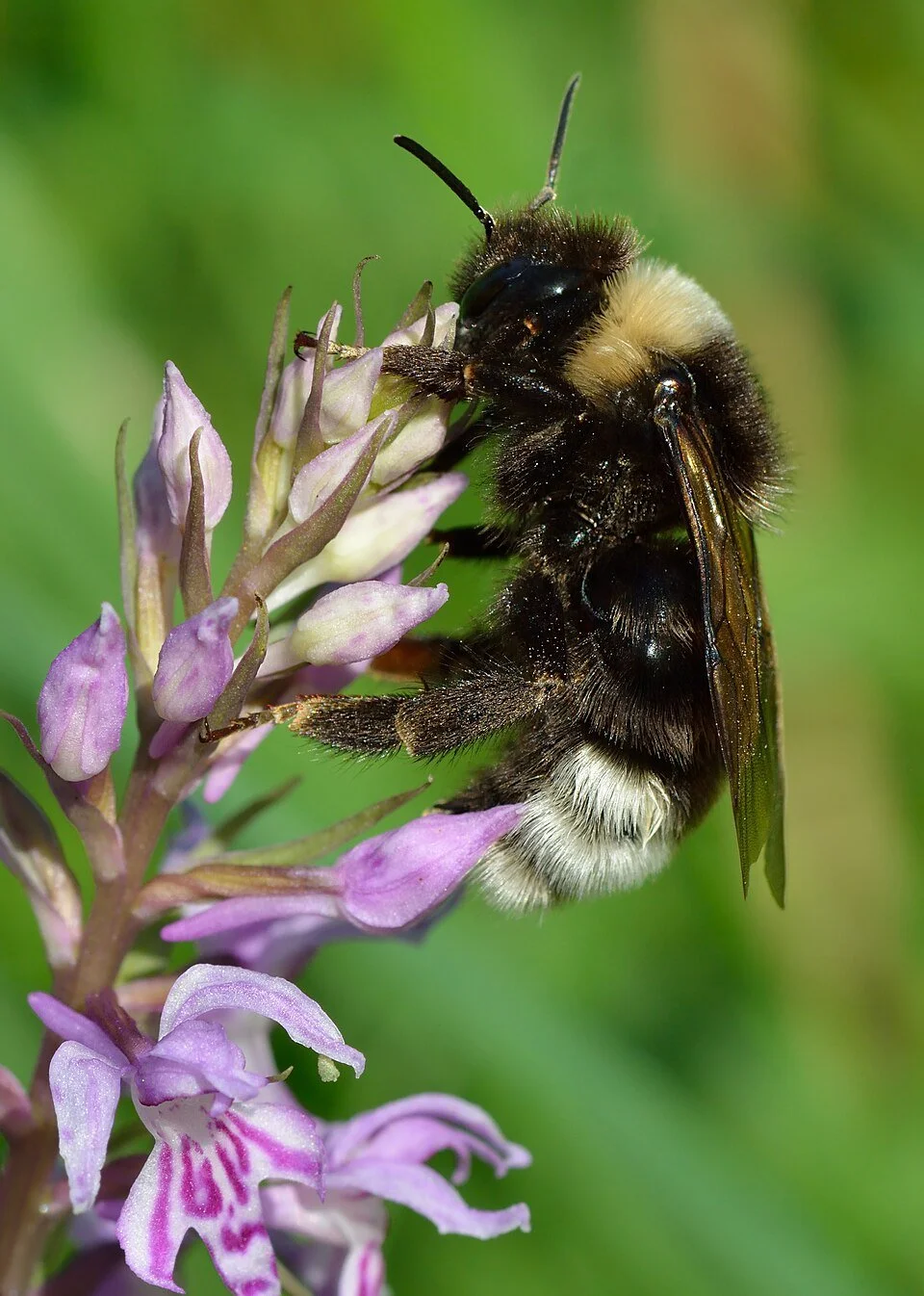
By Ivar Leidus - Own work, CC BY-SA 4.0, https://commons.wikimedia.org/w/index.php?curid=49867431
Not all cuckoo bees look the same… in fact, there are more than 3000 different species of them and each species looks different to the next. These sneaky bees look very like the host bees they take advantage of, which, of course, helps with their cunning deception.
As well as being bad parents, cuckoo bees are also bad pollinators and they don’t even make honey. So that’s a double no for cuckoo bees, but maybe they deserve some points for cunning and deception.
3. The cute one… the Teddy Bear bee
As the name suggests, the teddy bear bee is a fluffy, golden brown bee that is native to Australia. These mild mannered bees do not sting and usually live alone. Cute and gentle, sounding good already, right? But wait, there is more… pollen gets trapped really easily in their thick furry coats, making them great pollinators.
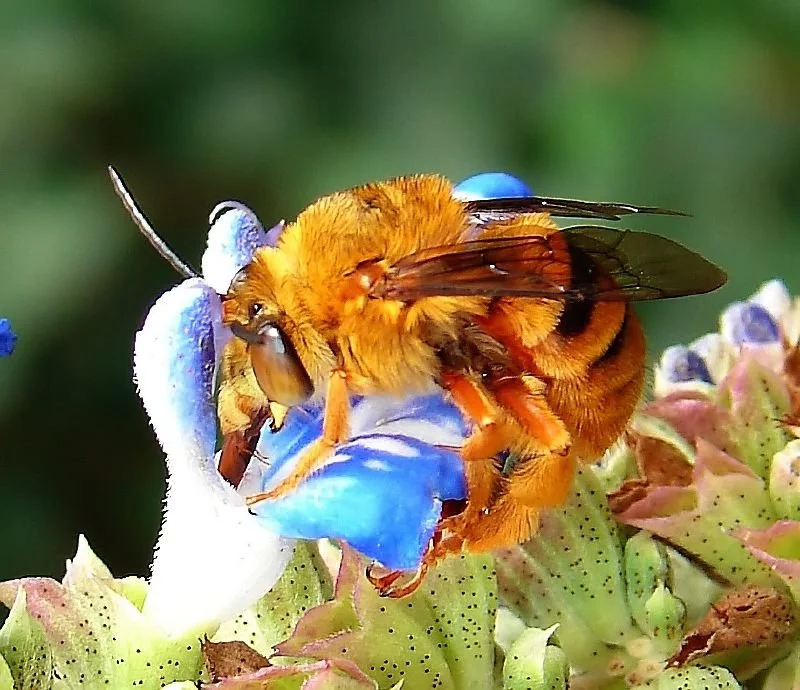
By Louise Docker - Flickr, CC BY 2.0, https://commons.wikimedia.org/w/index.php?curid=3048955
Not only are they good pollinators but they are also very good at a particular type of pollination, called buzz pollination. Not all bees can do this, but those that can use sound (buzzing) to release pollen from certain plants that store it really tightly in a part of the flower called the anther. Teddy bear bees can wrap their legs around these anthers and buzz their bodies (not their wings). This makes the anther shake. Once the Teddy bear bee makes just the right buzzing sound it can shake the pollen right out of the anther.
Is there anything these cute bees can’t do? Well they don’t make honey as they are solitary bees but I think we can let them away with that as they are such good pollinators. And if they weren’t cute enough, male teddy bear bees sleep with their legs wrapped around the stem of flowers.
So there you have it! Three unusual types of bees that don’t fit the basic bee stereotype. Which one do you like best?
