
These lavender bath bombs are so easy to make and a great way to learn a little science too. They make a really nice treat in a relaxing bath, or the perfect home-made, STEM-inspired gift for someone special.
This is probably the most relaxing science experiment you will ever do
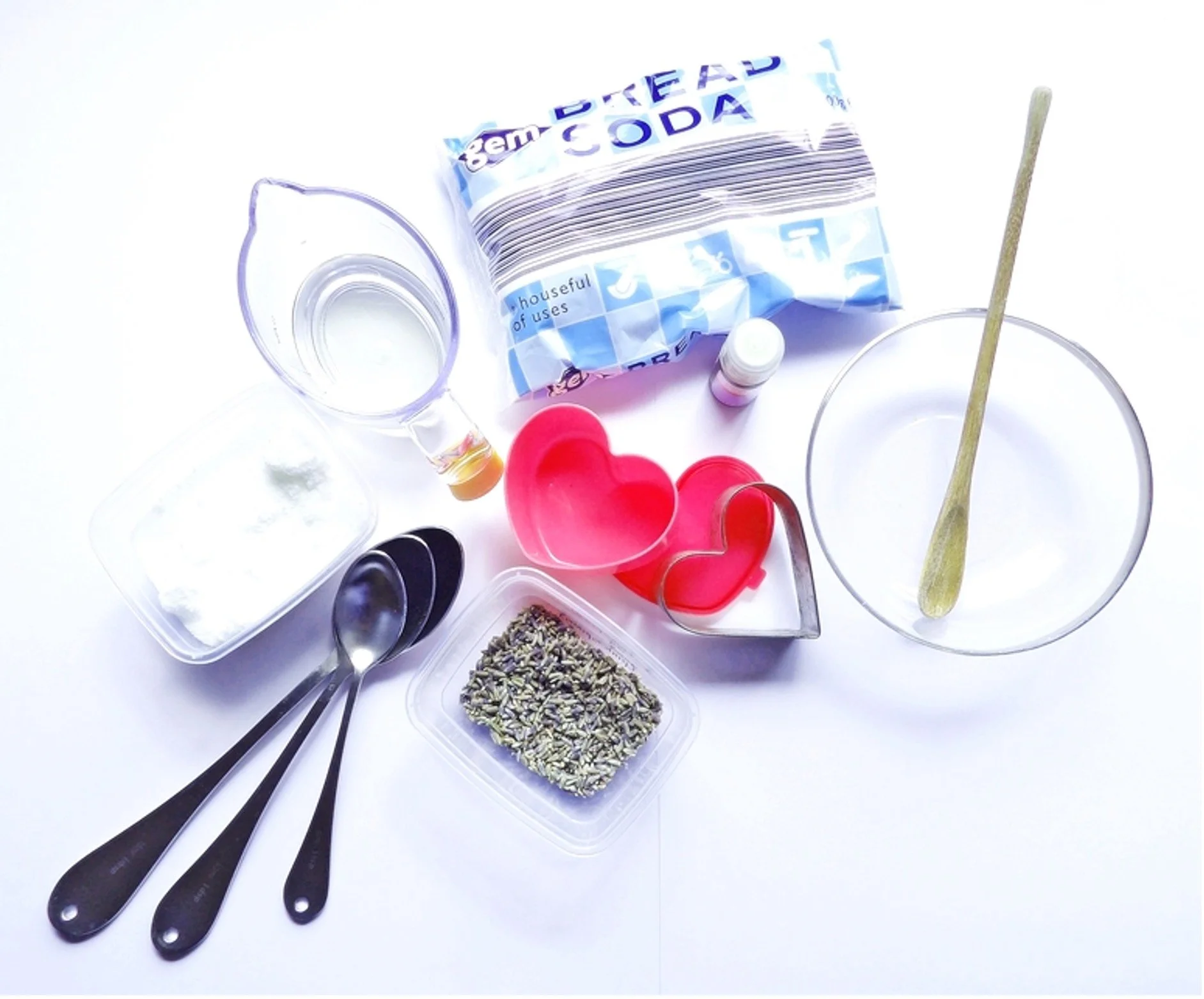
You will need:
½ tablespoon of citric acid (you can get this in a pharmacy)
1 heaped tablespoon of bread soda (also called bicarbonate of soda)
I teaspoon of dried lavender flowers (optional)
2 – 3 drops of lavender essential oil
1 teaspoon vegetable oil (I usually use sunflower oil)
A bowl and a spoon for mixing
A cookie cutter (or I love to use these little heart shaped containers – you should find similar in many discount or craft shops)
This will make one small bath bomb, if you want to make more, just multiply your ingredients.
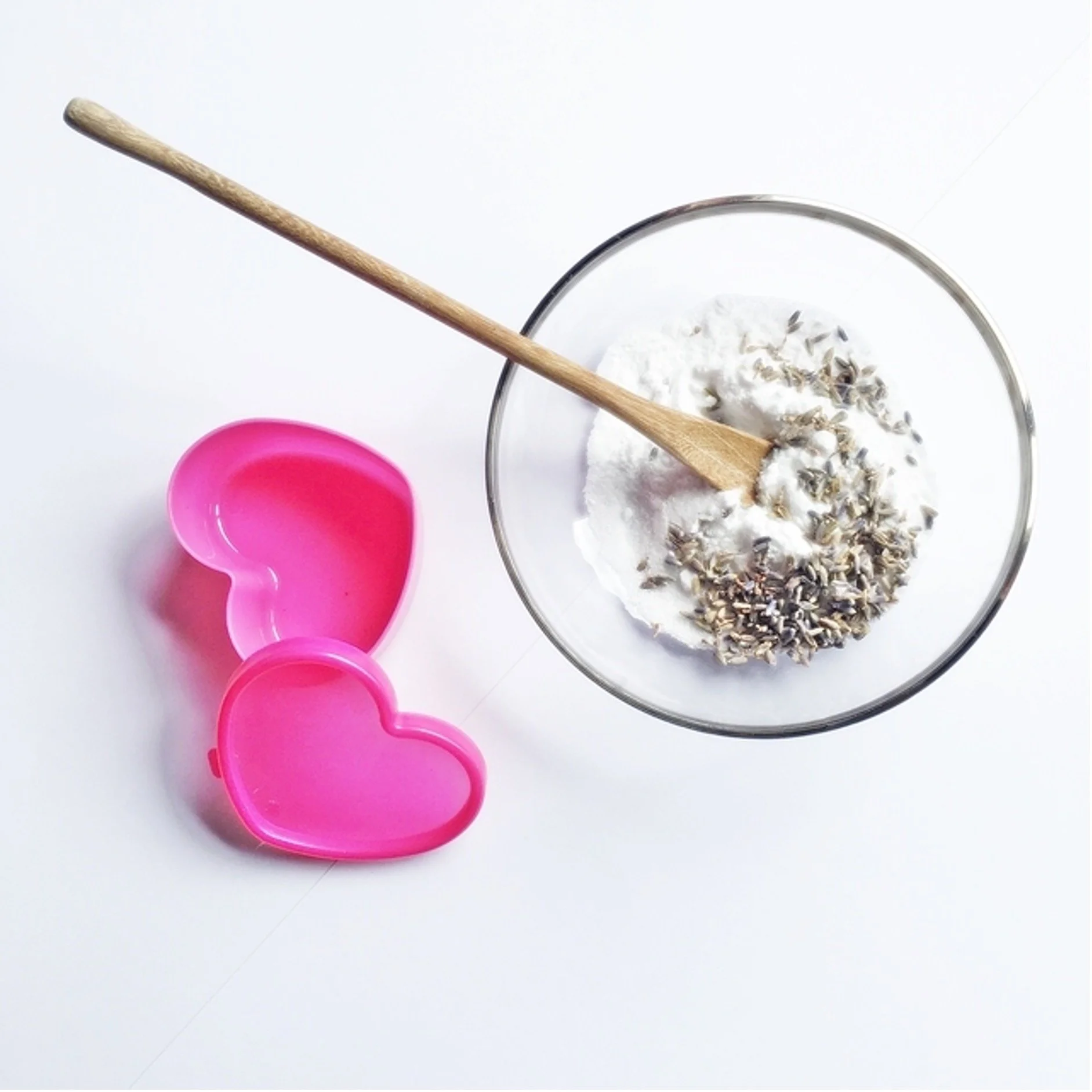
Add ingredients to the bowl and mix well
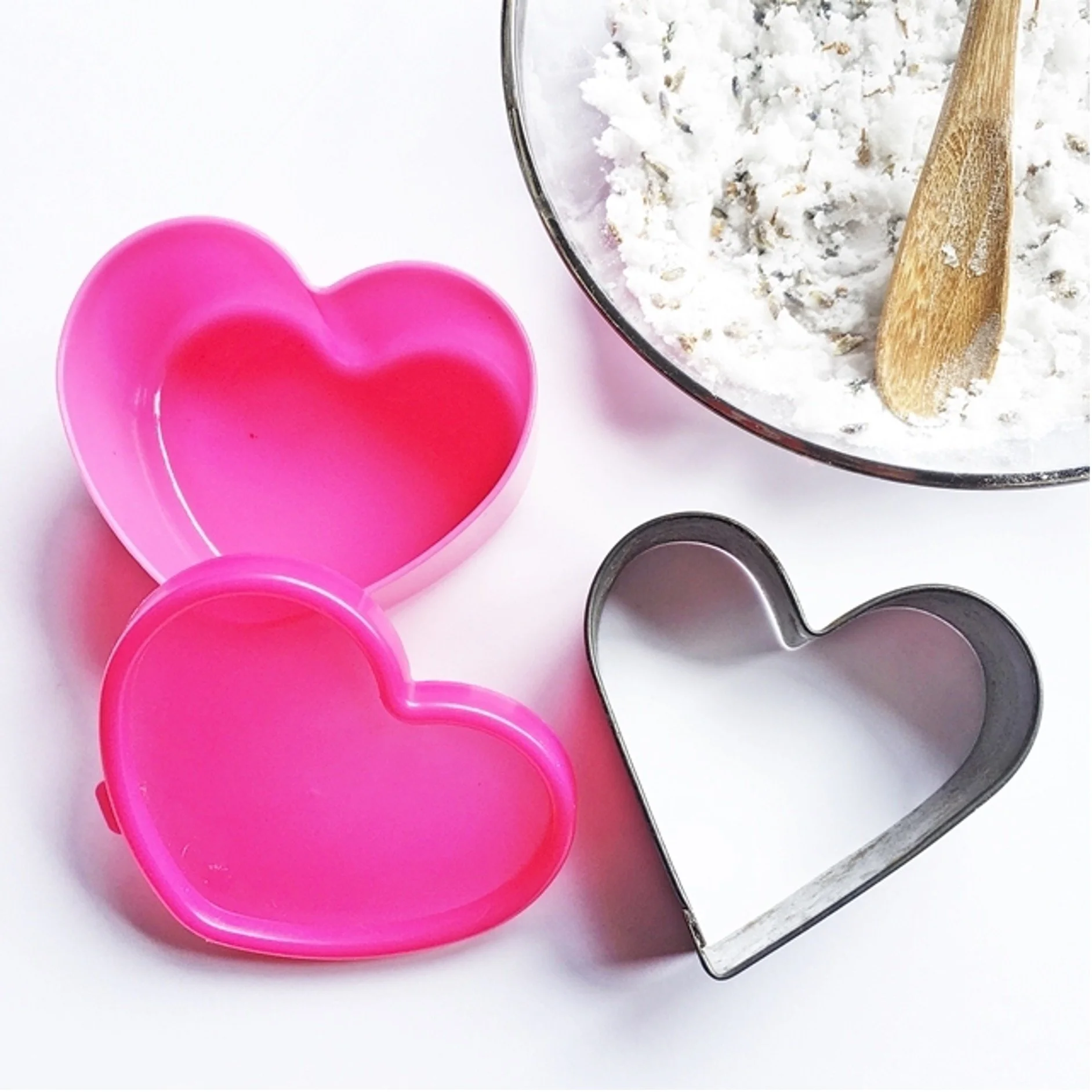
Rub the mould with sunflower oil
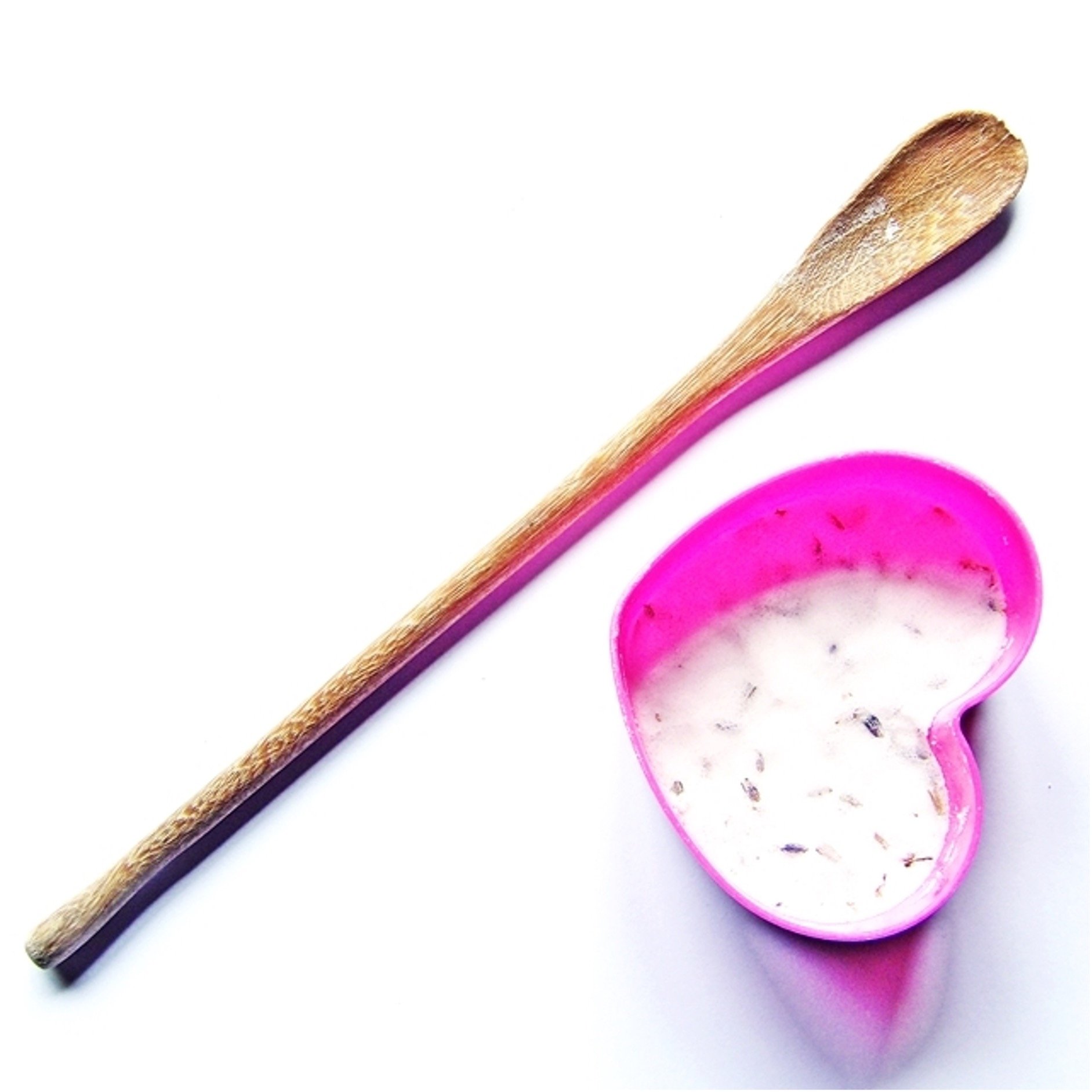
Press the mixture into the mould and then leave to dry overnight
What to do:
Place the citric acid, bread soda and dried lavender flowers in a bowl and mix.
Next add a few drops of lavender oil (best to have adult supervision for this bit) and then add the sunflower oil.
Mix well until everything is combined. It should look and feel a little like damp sand once ready.
Now it is time to prepare your mould; using tissue paper, rub the inside of the mould with a bit of sunflower oil. This will make it easier to remove the bath bomb when it is ready.
If you are using a cookie cutter as your mould, place it on a piece of greaseproof paper.
Spoon the mixture into your mould (either cookie cutter or plastic container) and press down well. You want to make sure that it is tightly packed.
Leave the mould somewhere dry and warm overnight; this is to allow the sunflower oil to evaporate off and the bath bomb to dry hard. If the bath bomb is still a bit damp just leave it one more day, to allow it dry fully.
Gentle push the dried bath bomb out of the mould and wrap it in waxed paper or baking paper; store in a dry place until you are ready to use it. If you used a plastic container as your mould just pop on the lid.
Next time you have a bath drop in your bath bomb and watch it fizz away releasing the little lavender flowers and the lovely scent of lavender.

The science bit:
Congratulations! You have just experimented with acids and bases. The citric acid is the acid and the bread soda is the base (sometimes called an alkali). When they are in powder form nothing much happens BUT, if we dissolve them in water they react together and make a gas called carbon dioxide… and that is what all the fizzing is about. It is a chemical reaction in your bath. Except this one is safe and lots of fun. The lavender flowers and lavender oil are just there to add a nice scent and the sunflower oil allows us to combine everything together into the shape we want.
Definition words: (keeping it simple)
Acid - a chemical that released tiny hydrogen ions (H+) when dissolved in water. On the pH scale, an acid has will have a value below seven.
Base/alkali - a chemical that receives tiny hydrogen ions (H+), making hydroxide ions (OH-) when dissolved in water. On the pH scale, an alkali will have a value above seven. Acids and alkali react together and neutralise each other in the reaction. When an acid and an alkali react together the reaction creates a salt and water. (Alkali are often referred to as bases in soluble, or liquid form.)
Dissolve - to mix completely with a liquid. For example, salt will dissolve in water, it breaks down into tiny pieces that mix throughout the volume of water and we cannot see the salt anymore. Sand doesn’t dissolve easily in water, we can mix sand in water but the sand will stay the same.
Chemical reaction - is when two or more substances react together making something new. The original substances will not be present at the end of the reaction (if it is a complete chemical reaction) but a new substance will be present instead.
Carbon dioxide - a chemical that is usually found as a gas. Its molecules are made up of one carbon atom and two oxygen atoms (CO2). it is naturally found in the air we breathe.
