
Nature provides an array of amazing flower colours at different times throughout the year, but what if you could add your own chosen colour to your favourite flowers? Well, now you can with this simple and beautiful experiment; learn how liquids are transported through flowers while you make a colourful display that will cheer you long after the experiment is complete. It’s time to investigate transpiration!
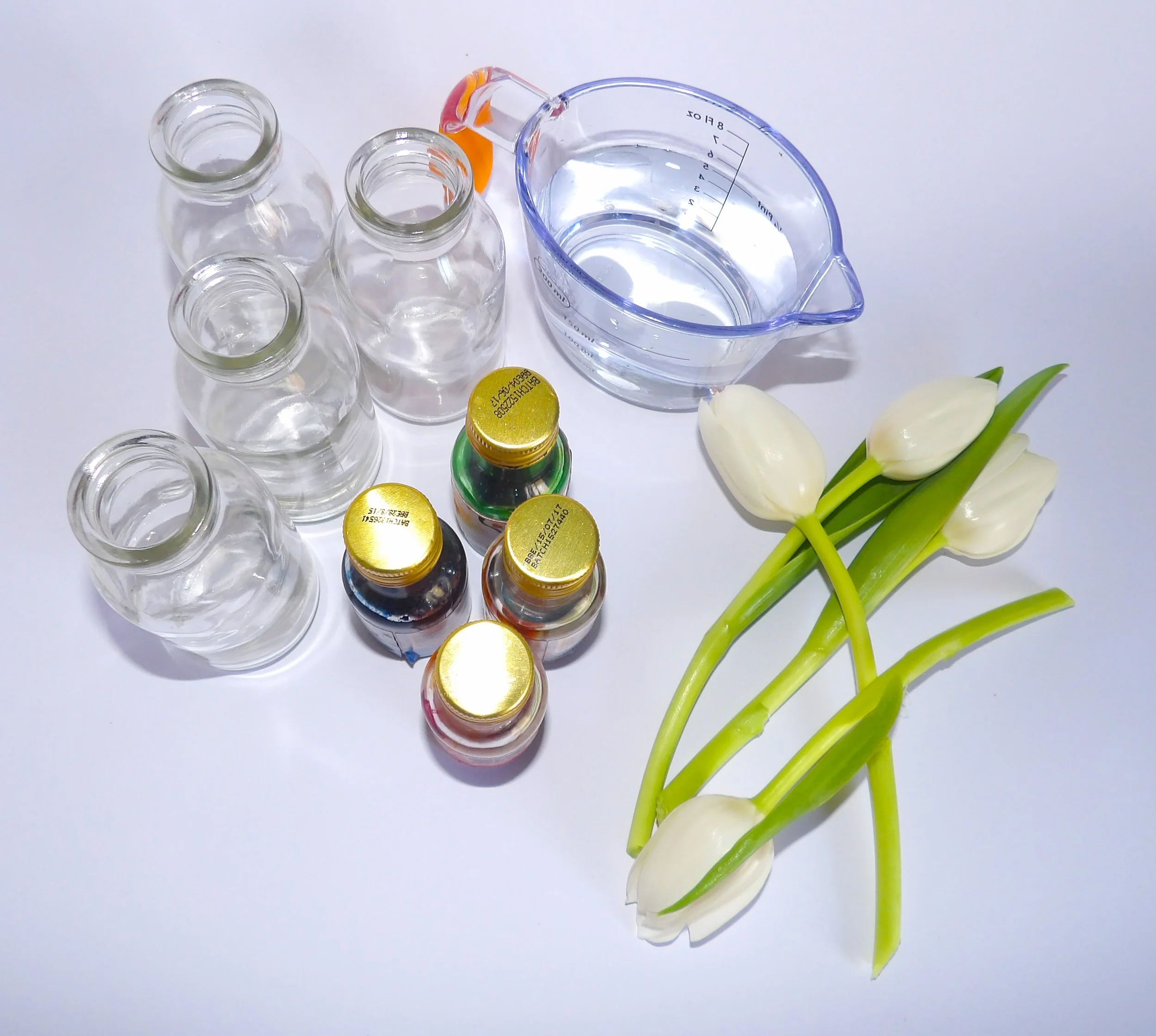
Here are the basic things you will need for this experiment
You will need:
Some small jars or containers
Some flowers (I usually use white but it can work for certain coloured flowers too, like daffodils)
Water
A selection of liquid food colouring (avoid black but most other colours work well)
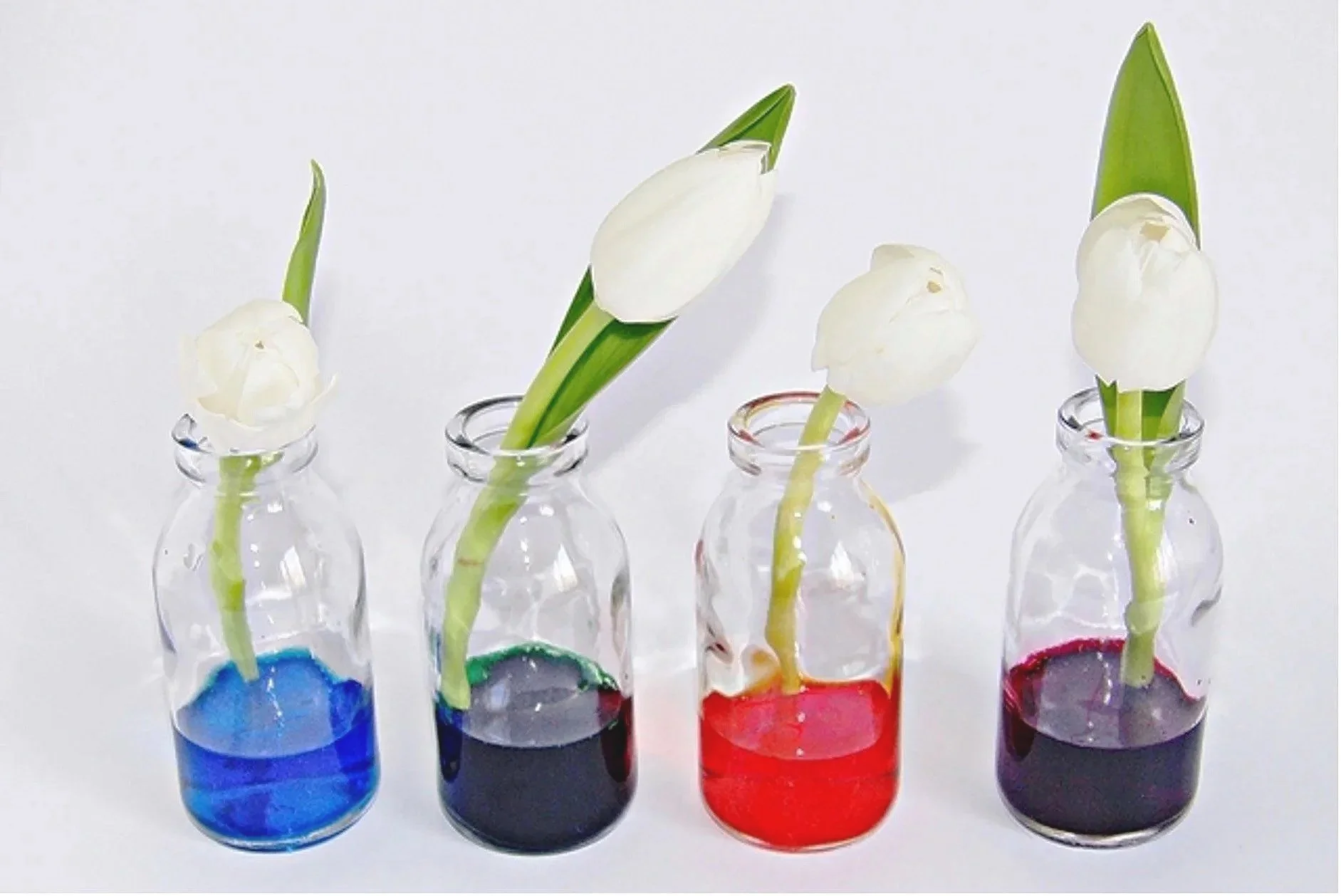
Add a different colour to each container to get a rainbow effect
What to do:
Put a small amount of water into each container.
Add about the same amount of liquid food colouring – a different colour to each container (you can add just a few drops but the results are better if you add about half a small bottle of food colouring).
Place one flower (or more) into each container and wait; you shouldn’t have to wait too long, the results are fairly quick, depending on the type of flower. If you don’t want to wait too long then try using white tulips. They are great if doing this experiment with younger children as the results are so quick.
That’s it! Super quick, super fun! Pretty soon you will have a lovely bouquet of rainbow coloured flowers. Take them out of the coloured water and pop them into a vase of clear water, they will keep their colour.
Don’t throw out the coloured water just yet, you can reuse with more flowers. The science experiment that just keeps giving!
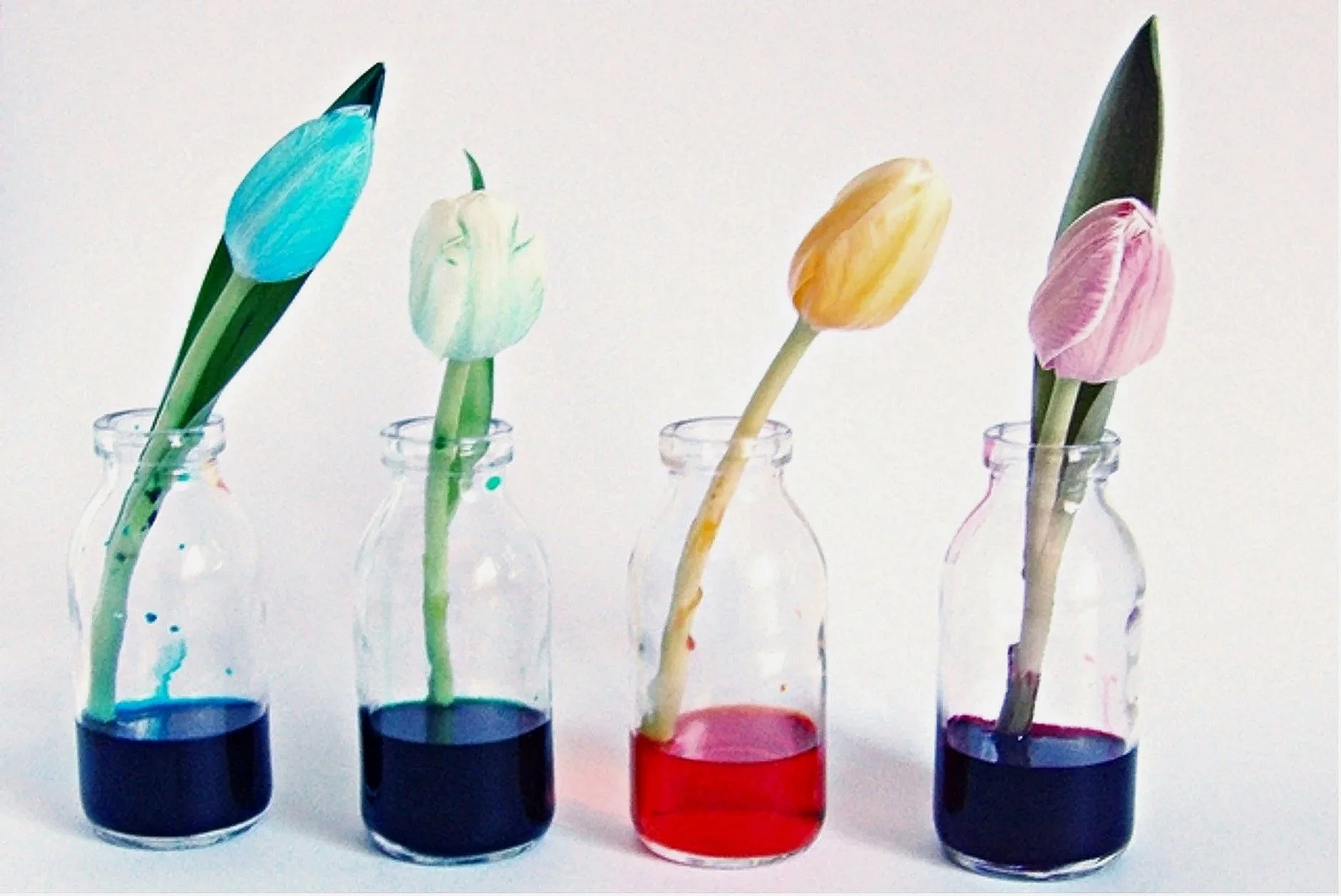
A beautiful rainbow of flowers
The science bit
This experiment is all about something called transpiration. The coloured water travels up the stem of the flower through little tubes called xylem; these xylem are like straws. When it gets all the way up to the flower at the top you can see how it changes their colour. The water evaporates out of the plant through little pores called stomata but the colour is left behind.
Transpiration is very like perspiration (sweating) in humans.
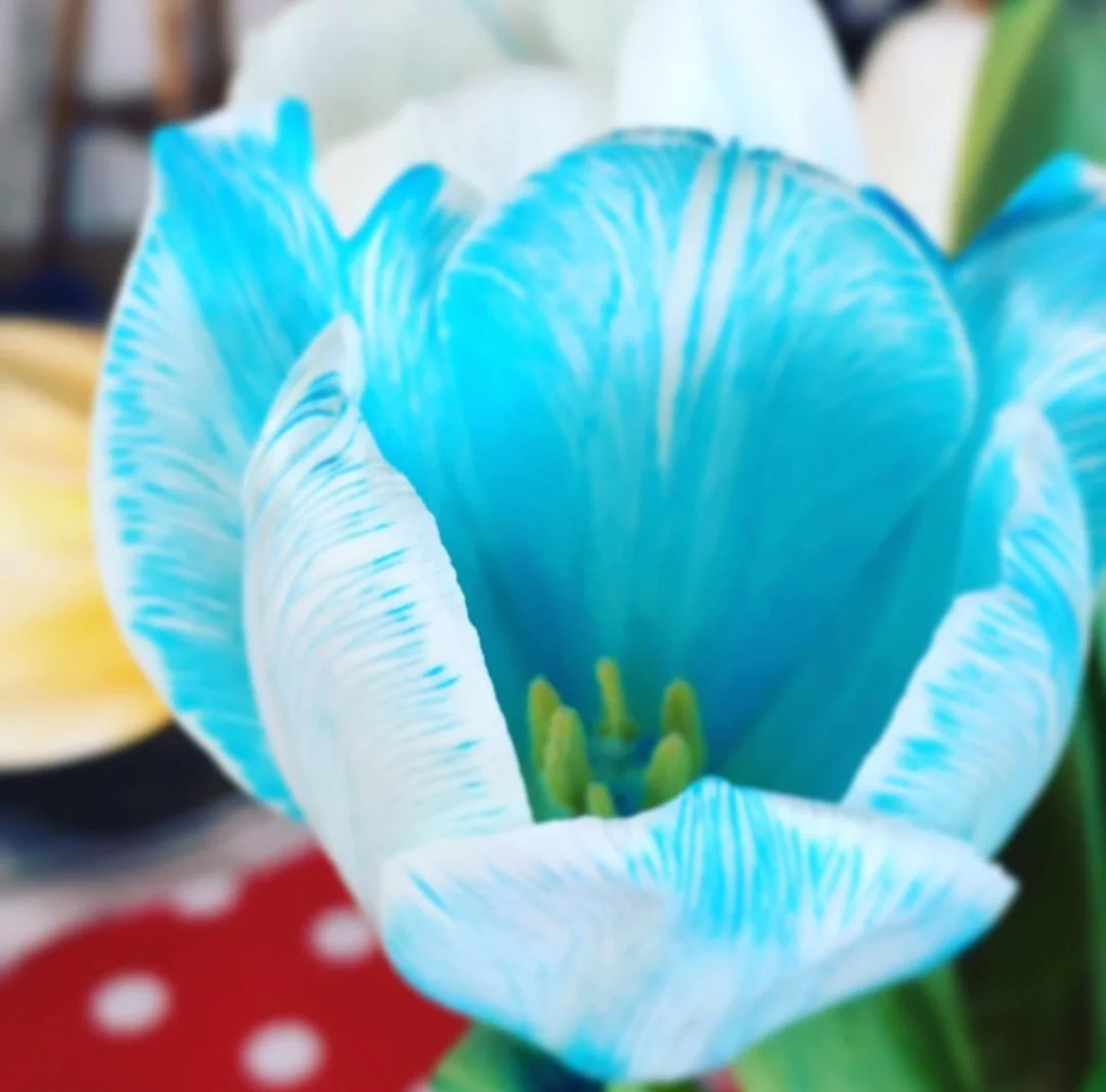
Definition words: (keeping it simple)
Transpiration - the loss of water (vapour) from a plant through pores (tiny holes) called stomata.
Xylem - the part of a plant that transports water and minerals from the roots to the leaves, stem, branches and flowers.
Stoma (s)/stomata (pl) - a stoma is a tiny pore, or hole that allows gases, like oxygen and carbon dioxide to pass in and out of plant parts, and water vapour to pass out. Stoma can widen and close as needed.
Pores - very small holes or openings on lots of surfaces like skin and membranes.
Evaporates/evaporation - the stage change of a liquid to a gas, without boiling.
Perspiration - the release of (salty) liquids through the body’s sweat glands or pores.
